
Bridging OT and IT with custom software
A Pilbara mining operation
The data that runs an operation often gets stuck on the plant floor, in control systems and historians the business cannot easily reach. A custom integration layer moves that data into the systems that plan, report and act on it, securely and in near real time.
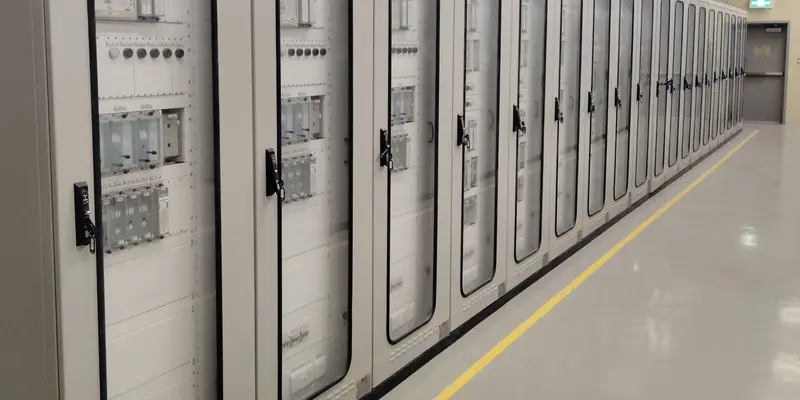
plant data reaching the systems that use it
a single integration in place of point-to-point links
OT protected, with controlled read-only access
The challenge
The data that runs an operation lives in operational technology: PLCs, SCADA, historians and control systems, purpose built to keep the plant running and deliberately kept apart from the corporate network. The systems that plan maintenance, report production and forecast sit on the IT side. Between them is a gap that people bridge with manual exports, spreadsheets and one-off links that break quietly.
Closing that gap is more than a data pipe. It has to respect the OT boundary and its security, survive network segmentation, carry the volume and cadence of industrial signals, and land the data in a shape the business systems can actually use. Get it wrong and you either starve the business of live data or expose control systems that should never be reachable.
When it's time to act
The signs we commonly see when this initiative is due.
- Production data reaches planning as a manual export someone remembers to run.
- Point-to-point links between plant and business systems that break quietly.
- The business wants live data and the control engineers rightly refuse direct access.
- Historian data rich on the plant floor and invisible to the systems that plan and report.
- Every new report or integration request starting another one-off connection.
How we deliver it
Map data and boundary
Identify the OT sources, the signals that matter, and where the IT/OT boundary and security controls sit.
Design the integration
Choose interfaces and protocols, drawing on references such as ISA-95 and OPC UA, and design one integration layer rather than point-to-point links.
Build securely
Read from OT through a controlled, one-way boundary, working to your security standards with frameworks such as IEC 62443 available where they help.
Land it usable
Contextualise and model the data so business systems, dashboards and reports can consume it directly.
Run and support
Monitor the flows, alert on gaps, and support the integration, up to 24/7 for operations that need it.
Map data and boundary
Identify the OT sources, the signals that matter, and where the IT/OT boundary and security controls sit.
Design the integration
Choose interfaces and protocols, drawing on references such as ISA-95 and OPC UA, and design one integration layer rather than point-to-point links.
Build securely
Read from OT through a controlled, one-way boundary, working to your security standards with frameworks such as IEC 62443 available where they help.
Land it usable
Contextualise and model the data so business systems, dashboards and reports can consume it directly.
Run and support
Monitor the flows, alert on gaps, and support the integration, up to 24/7 for operations that need it.

Our approach
- Understand what the operation needs from its data, with the control room, maintenance and planning people who live the gap today.
- Assess the current integration and its security against your own OT standards and recognised industry practice, so what we change is provable rather than asserted.
- Design a single integration layer between OT and IT, using interoperability references such as ISA-95 and OPC UA where they suit, rather than another brittle point-to-point link.
- Build on foundations we trust, a .NET back end, PostgreSQL and cloud-agnostic deployment, reading from OT through a controlled boundary that keeps control systems protected.
- Model and contextualise the data so it lands in the shape the business systems, historians and reports need, and support the result up to 24/7.
Tools and methods
The value it creates
- Operational data reaching planning, reporting and analytics in near real time, without manual exports.
- One integration layer to maintain in place of brittle point-to-point links.
- The OT boundary kept secure, with controlled read-only access where the business needs it.
What changes
Manual exports and spreadsheets
Plant data landing in business systems in near real time
Point-to-point links per request
One integration layer to build on and maintain
Access decided ad hoc
A controlled, read-only boundary that protects control
Raw tags without context
Data modelled so business systems can consume it directly
Where these initiatives fail
The failure modes we design against.
- Treating the OT boundary like a business integration, which either blocks the data or exposes control.
- Building another point-to-point link because it is quicker than the layer that ends them.
- Moving tags without context, so the business receives numbers it cannot interpret.
- Under-engineering for volume: industrial signal cadence breaks integrations designed for transactions.
Common questions
Is connecting OT to IT safe?
Done properly, yes. The flow is read-only through a controlled boundary, networks stay segmented to your security standards, and frameworks such as IEC 62443 are available where they help. Control systems remain unreachable from the enterprise side.
Why not just use the vendor's integration?
Sometimes we do. Vendor tools earn their place where they fit. The custom layer earns its where data has to land shaped for your systems, across several sources, without a licence per connection.
What does near real time mean here?
Seconds to minutes depending on the signal and the decision it feeds. The design starts from what each consumer actually needs rather than streaming everything at maximum rate.
Key terms
Plain-language definitions from our glossary for the concepts this page leans on.
Standards and further reading
Reference points we draw on where they suit the work. We also work to client internal standards and established site practice.
- ISA-95 enterprise-control system integration (International Society of Automation)
- OPC Unified Architecture, platform-independent industrial interoperability (OPC Foundation)
- ISO 8000-110:2021 Data quality, master data exchange (ISO)
- DAMA Data Management Body of Knowledge (DMBOK) (DAMA International)
- Dimensional modelling techniques (Kimball Group)
- Guidelines library for mining technology and interoperability (Global Mining Guidelines Group)
Further reading
Articles and calculators on the methods behind this work.
Related projects
Facing a similar challenge?
Tell us what you are working through and we will bring the right mix of engineering, data and hands-on experience.
Contact us