
Rail solutions
Rail assets are linear, heavily regulated and only reachable in planned possessions. What that does to maintenance, data and systems, and what good answers look like.
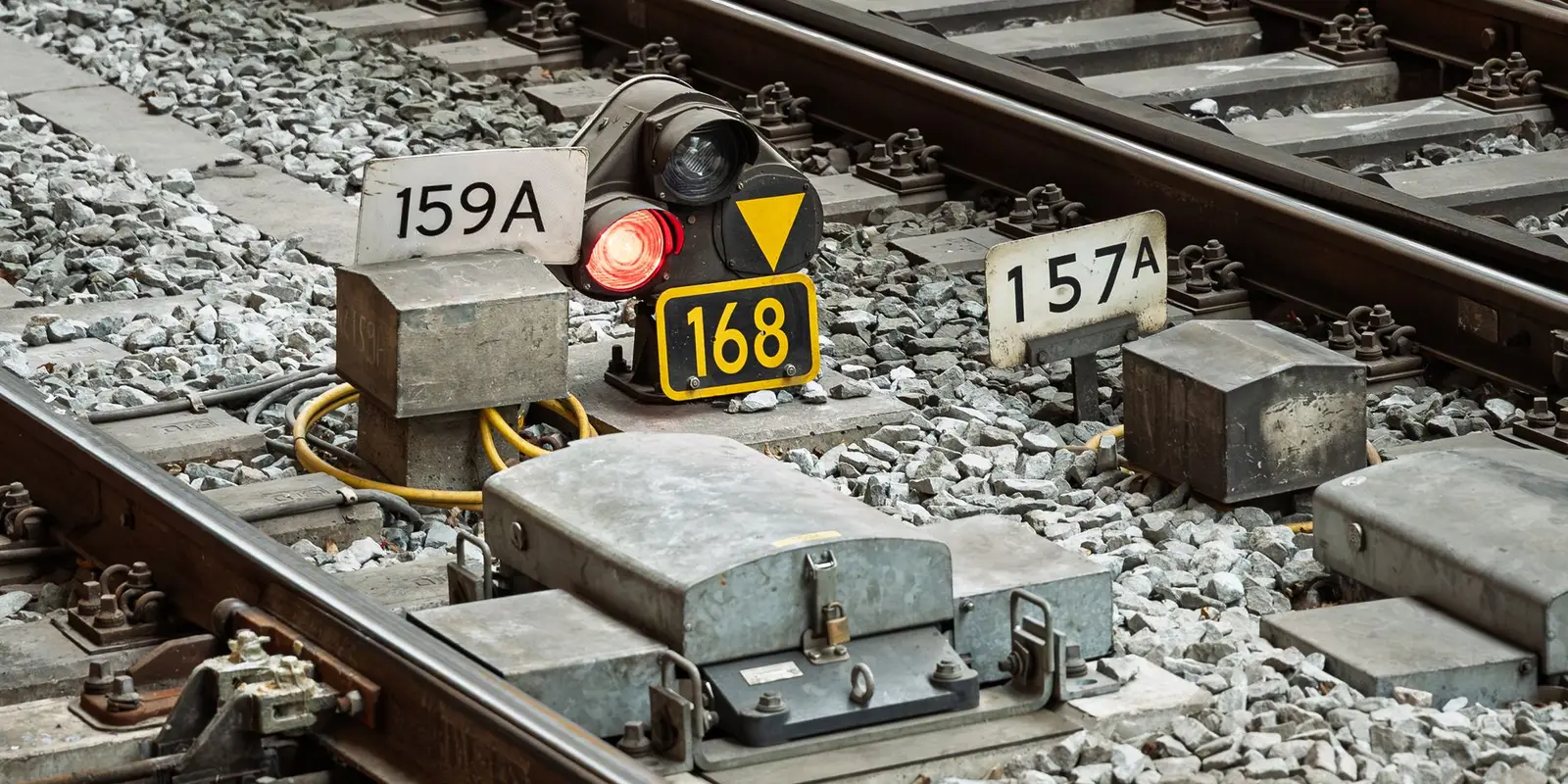
Rail carries two asset problems at once. Below rail is a linear network of track, structures, signalling and power that can only be worked on when trains are kept off it. Above rail is a fleet of locomotives and wagons that has to keep cycling to a timetable or a mine to port schedule.
Both sit inside a safety regime that expects evidence rather than intent. The work below is the consulting, engineering and software Enco does for rail operators and maintainers, organised by the problems it is usually brought in to solve.
What makes rail different
The conditions that decide how the work has to be done.
Access is the scarcest resource
Most infrastructure work happens in possessions booked months ahead. The constraint is not crew or parts but the window itself, which means planning quality decides how much work a network can actually absorb in a year.
Safety assurance runs through everything
Rail safety law and accreditation put a safety management system around operations and maintenance, so changes need evidence, records and traceability. Data quality stops being an efficiency question and becomes a compliance one.
Linear assets do not fit equipment registers
Track, structures and overhead are referenced by kilometrage and section rather than by a tag on a nameplate, so the asset structure has to hold both linear and discrete assets and still join defect history to location.
Heavy haul is its own duty cycle
High axle loads, continuous cycling and long unbroken runs make wear and fatigue the dominant failure mechanisms, and they move faster than they do on general freight or passenger networks.
The network generates its own condition data
Wayside detectors, track geometry recording and onboard systems produce measurement continuously. The gap is rarely sensing, it is what happens to a reading once it exists.
Interfaces multiply the coordination
Above rail and below rail operators, maintainers, ports and mines each run their own plans. Work that touches more than one of them lives or dies on the interface rather than the technical scope.
Common challenges, and why they happen
1. Work that only fits inside a possession
Track access is booked far ahead and shared between disciplines, so a job that is not fully prepared either burns a window or gets bumped to the next one, months later.
2. Wayside and inspection data that stops at the report
Detectors, geometry runs and inspections generate more findings than anyone can action, so alarms are tuned out or reviewed in a separate system that the maintenance process never sees.
3. Maintenance set by time alone
Calendar and tonnage intervals are simple to administer and easy to defend, but they spend money on healthy components and still miss failures that do not follow age.
4. Asset information split across systems
Above rail and below rail typically run different systems with different referencing, so the same defect can sit in three places under three names and none of them roll up.
5. Evidence for the regulator assembled by hand
Safety and performance reporting obligations draw on data spread across maintenance, operations and inspection systems, so each return becomes a manual exercise that is hard to reproduce.
6. Plans that do not line up across the supply chain
Mine, rail and port each optimise their own schedule, so a change at one end shows up as an unplanned constraint at the other, usually late.
What good looks like
For each challenge above, the shape of a solution that holds, and the tests that tell you whether it does.
Challenge 1
Work that only fits inside a possession
Planning that treats the possession as the constraint, with work bundled by location and window, and a readiness gate before anything is committed to it.
What makes it good
- Each job packaged with materials, plant and permits secured before the window is committed
- Work bundled by location so one possession clears several jobs
- Contingency and a stop-work decision point built into the plan
- Possession utilisation measured afterwards and fed into the next one
Challenge 2
Wayside and inspection data that stops at the report
Thresholds tied to defined actions, with findings raised as work in the maintenance system and owned by a named person.
What makes it good
- Every alarm level has a defined response and a timeframe
- Findings become work orders against the right asset and location
- False alarm rate tracked, because trust is the thing being spent
- Trends kept by asset so repeat offenders surface
Challenge 3
Maintenance set by time alone
Condition-led intervals where the failure mode gives warning, with time-based work kept for what genuinely wears out.
What makes it good
- Intervals justified by a failure mode rather than by history of the interval
- Condition data from wayside, geometry and inspection feeding the decision
- Run to failure recorded as a decision where the consequence allows it
- Review triggered by defects, incidents and changes in duty
Challenge 4
Asset information split across systems
One asset structure that carries both linear and fleet assets, with consistent location referencing and failure coding across them.
What makes it good
- Kilometrage or chainage referencing applied the same way everywhere
- Defect history joins to both the location and the asset
- Equipment classes and boundaries defined, so failure rates compare
- One place where a change to the structure is requested and approved
Challenge 5
Evidence for the regulator assembled by hand
Governed pipelines that produce the return from source records, with lineage back to the event.
What makes it good
- Each reported figure traces to its source record
- The same extraction reproduces the same number months later
- Definitions agreed once and applied to every audience
- Exceptions visible before the deadline rather than after
Challenge 6
Plans that do not line up across the supply chain
A shared view of the plan and its constraints, with exception alerting where a change affects another party.
What makes it good
- One plan visible to the parties that have to act on it
- Changes flagged to the affected party automatically, not by phone
- Interfaces and handover points defined, including who decides
- Measures agreed across the chain rather than per site
How this work gets delivered
The delivery models this work usually runs under, and what each one suits.
| Delivery model | When it fits | How it runs |
|---|---|---|
| Defined project or study | A scope with an end point, such as a maintenance strategy review, an asset data rebuild or a reporting pipeline. | Fixed deliverables and an agreed schedule, with the reasoning handed over so the result can be maintained without us. |
| Embedded specialist | Reliability, planning or asset information capability that has to exist inside the team rather than in a report. | A practitioner works in your systems and your cadence, doing the work and building capability at the same time. |
| Possession and shutdown support | Major works where preparation quality decides whether the window delivers. | Scope challenge, work packaging, materials readiness and the gates that decide what is allowed into the window. |
| Ongoing support under a panel or rates agreement | Improvement that needs a long run, or work that arrives in pieces across a network. | Drawn down as needed, with the same people keeping the context that takes months to learn. |
| Hosted application or platform | Coordination and monitoring gaps that software fills, such as shutdown coordination or telemetry from remote assets. | Built and run as a service, or deployed into your environment where policy requires it, with your data staying yours. |
How we work inside them
The same sequence whichever model the work runs under.
- Understand the constraint first, with the people who plan possessions and the crews who work inside them.
- Assess the current state against your safety management system, your own standards and recognised industry practice, so the starting point is evidenced.
- Rank by consequence, using the network's own risk framework rather than importing a second definition of risk.
- Work inside your systems and your referencing, so asset information stays consistent with what the regulator and the maintainer already use.
- Design for the window. Anything that cannot be prepared, staged and completed inside a realistic possession is not a plan yet.
- Leave the reasoning behind in documented decisions, job packs and data standards, then measure the change with numbers defined before the work started.
Tools, methods and systems
Reliability and strategy
- Criticality assessment across linear and fleet assets
- FMECA and RCM decision logic
- Failure-finding tasks for protective systems
- Defect trending and repeat failure analysis
Asset data and work management
- Taxonomy and hierarchy for linear and discrete assets
- Location referencing by kilometrage and section
- Job packs, kitting and possession readiness gates
- SAP PM, Pronto Xi and IBM Maximo
Condition and monitoring
- Wayside detector data into the work process
- Track geometry and inspection findings management
- Vibration, oil and thermography programs for depots and fixed plant
- Exception-based alerting with defined responses
Data, analytics and integration
- Integration across above rail and below rail systems
- Dimensional modelling and incremental ETL
- Power BI operational and regulatory reporting with lineage
- Custom applications for coordination gaps
Common questions
Do you work above rail, below rail, or both?
Both. Above rail work tends to centre on fleet reliability, maintenance strategy and depot planning. Below rail work centres on linear asset information, possession planning and the condition data the network produces. The two overlap most in asset information and reporting, which is often where the value is largest.
How does this fit our safety management system and accreditation?
It works inside them. Enco is not an accreditation body and does not certify anything. The work is shaped so that changes to strategy, data or systems produce the records and traceability your safety management system already requires, rather than creating a parallel process that has to be reconciled later.
Can you help prepare work for a possession?
Yes. That usually means challenging the scope, packaging jobs by location and window, confirming materials and plant, and setting the readiness gate that decides what is allowed into the window. The aim is that the possession is spent working rather than finding out what is missing.
Do you integrate wayside and geometry data?
Yes, and the integration is the easy half. The harder half is agreeing what each threshold means, what response it triggers and who owns it, because a feed that produces alarms nobody acts on becomes noise within a month.
Do you work on heavy haul as well as general freight?
Yes. Heavy haul changes the failure mechanisms rather than the method: wear and fatigue dominate, intervals are shorter, and the cost of an unplanned stop is measured against the whole mine to port chain rather than one train.
Key terms
Plain-language definitions from our glossary for the concepts this page leans on.
Standards and further reading
Reference points we draw on where they suit the work. We also work to client internal standards and established site practice.
- Safety performance reporting requirements (ONRSR)
- National rail safety data (ONRSR)
- Australian rail standards (RISSB)
- ISO 55001:2024 Asset management system requirements (ISO)
- ISO 14224:2016 Collection and exchange of reliability and maintenance data for equipment (ISO)
- ISO 17359:2018 Condition monitoring and diagnostics of machines (ISO)
- Best practices, metrics and guidelines for maintenance and reliability (SMRP)
Related experience
How these initiatives are approached, and the value they create.
Related articles
The methods behind the work, explained in full.
Calculators
Free tools that run in the browser, with the formulas explained.
Working through something like this?
Tell us what you are dealing with, or see how we work through an engagement.