
Mining solutions
Mine sites run single trains of critical equipment against a shipping schedule, a long way from the nearest spare. The challenges that follow, what good answers look like, and how the work gets delivered.
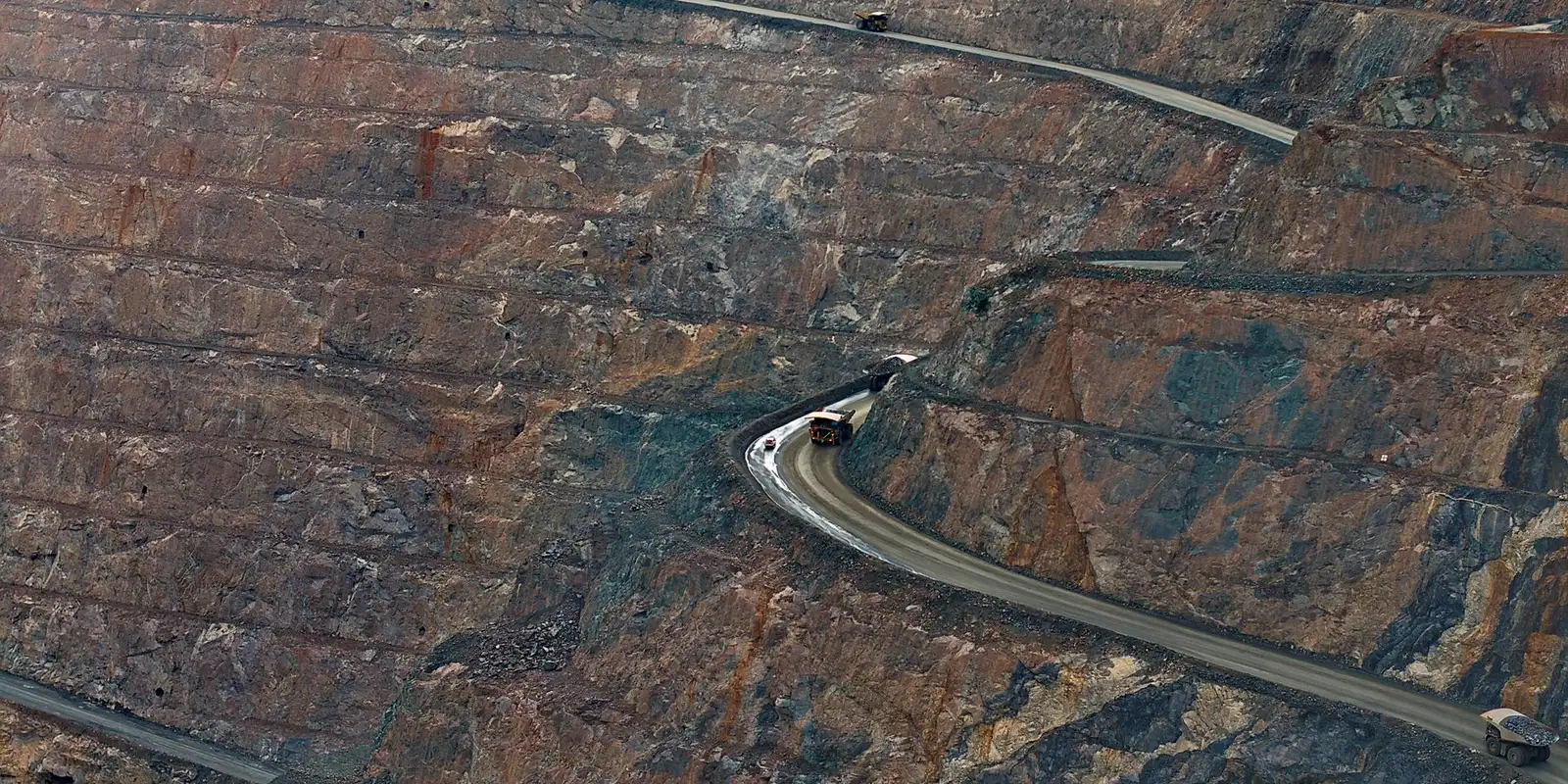
Mining is an asset-intensive business with a deadline. The plant has to deliver tonnes to a schedule that was set by the mine plan and the shipping calendar, using equipment that is often unspared, at a site where the nearest replacement part can be a week away.
That shapes every decision about maintenance, data and systems. The work below is the consulting, engineering and software Enco does for mining operations, organised by the problems it is usually brought in to solve.
What makes mining different
The conditions that decide how the work has to be done.
Production sets the clock
Downtime is measured in tonnes against a fixed rail and shipping schedule, so the cost of an hour lost is rarely just the repair. It also means work has to fit the windows the plan allows, which is why shutdown timing decides so much of the maintenance program.
Critical equipment usually has no twin
Crushers, mills, conveyors and stackers frequently run as single trains. Redundancy that other industries take for granted does not exist, so consequence sits high on a small number of assets and strategy has to be built around them.
Distance changes the economics
Remote sites, fly-in rosters and long supply lines lengthen every response. A part that takes two days elsewhere can take two weeks, which moves the value from fixing faster to knowing earlier.
The ore body keeps changing the duty
Feed grade, hardness, moisture and fines content all move over the life of a pit, and equipment specified for one ore rarely sees only that ore. Wear rates, chute flow and throughput shift with it.
The asset base has an end date
Life of mine caps the horizon for renewal decisions. An asset worth rebuilding on a thirty year plant may not be worth rebuilding when the pit that feeds it closes in four years, and relocatable plant changes the answer again.
Much of the work is contracted
Maintenance, shutdowns and sometimes whole operations run through contractors, so the contract decides what is actually delivered. Strategy, data standards and reporting have to be written into it or they do not happen.
Common challenges, and why they happen
1. Unplanned downtime on critical fixed plant
Single trains of equipment, high consequence and long lead spares mean one failure can stop the circuit, and reactive work costs more, takes longer and carries more risk than the same job planned.
2. Maintenance strategies nobody designed
Task lists accumulate from vendor manuals, incidents and other sites, so the program grows but never gets challenged, and invasive work often introduces as much risk as it removes.
3. Asset data that cannot answer a question
Registers are built over a decade by several teams and at least one system migration, so hierarchies vary by area, equipment classes are blank and failure coding is inconsistent.
4. A weekly schedule that cannot hold
Break-in work, materials that are not secured and permits raised on the day mean the schedule is rebuilt each morning, and planning gets pulled into expediting rather than preparing next week.
5. Reporting the business argues with
Daily and weekly numbers are assembled by hand from the ERP, the historian and spreadsheets, so definitions drift between audiences and an auditor's question takes a week to answer.
6. Bulk materials handling losses
Chutes and bins designed for one ore meet a different one as the pit develops, so blockages, spillage, carryback and accelerated wear turn into production loss and cleanup labour.
What good looks like
For each challenge above, the shape of a solution that holds, and the tests that tell you whether it does.
Challenge 1
Unplanned downtime on critical fixed plant
Effort ranked by consequence, with condition monitoring where failures give warning, engineered spares where they do not, and every finding converted into planned work.
What makes it good
- Monitoring coverage follows criticality rather than being spread evenly
- Techniques chosen failure mode by failure mode, with intervals set from the P-F interval
- Findings raise work in the CMMS rather than sitting in a contractor's report
- Warning time long enough to plan, kit and schedule the repair
Challenge 2
Maintenance strategies nobody designed
A criticality-led strategy where the critical systems get structured analysis and the long tail gets templates, with every retained task answering a specific failure mode.
What makes it good
- Analysis depth is proportionate to consequence, not applied evenly
- Run to failure appears as a deliberate decision where it is honest
- Tasks load into the CMMS as executable plans with intervals, trades and materials
- A review trigger exists for incidents, modifications and changes in duty
Challenge 3
Asset data that cannot answer a question
One taxonomy applied consistently, a hierarchy verified against the field, and failure coding short enough to be used at the end of a shift.
What makes it good
- Failure history aggregates cleanly from maintainable item up to plant
- Equipment classes and boundaries are defined, so failure rates are comparable
- Bills of material make parts identification a lookup rather than a memory test
- Governance covers who may create and change records
Challenge 4
A weekly schedule that cannot hold
A work management cycle where ready to schedule means nothing is outstanding, backed by complete job packs and measures defined once.
What makes it good
- Materials reserved and kitted before a job is scheduled
- Permits, isolations and access identified during planning, not at the job face
- Schedule compliance and break-in measured the same way every week
- Planners protected from today so they can work ahead of the window
Challenge 5
Reporting the business argues with
Governed pipelines into a modelled warehouse, one agreed definition per measure, and lineage from any figure back to its source record.
What makes it good
- One definition per measure, agreed with the people who use it
- Validation on every load, so bad records stop before they reach a report
- Lineage traceable in a click for audits and joint venture partners
- The report lands on time whether or not anyone comes in early
Challenge 6
Bulk materials handling losses
Material characterisation first, then flow modelled across the real range of moisture and throughput before steel is cut, with maintenance access designed in.
What makes it good
- Flow verified across the full moisture and fines range, not a single design point
- Wear liners arranged so they can be changed in the window available
- Transfer geometry that controls the stream rather than relying on impact
- Design decisions recorded against the material data that drove them
How this work gets delivered
The delivery models this work usually runs under, and what each one suits.
| Delivery model | When it fits | How it runs |
|---|---|---|
| Defined project or study | A scope with a clear question and an end point, such as a criticality assessment, a chute redesign or a reporting rebuild. | Fixed deliverables, an agreed schedule and a handover that includes the reasoning, not just the output, so the result can be maintained after the engagement closes. |
| Embedded specialist | A gap in the team, a delivery peak, or capability that has to exist on site rather than in a report. | A practitioner works inside your team and your systems, doing the work and building capability alongside it, which suits reliability engineering, planning and master data roles. |
| Ongoing support under a panel or rates agreement | Work that arrives in pieces, or improvement that needs a long run rather than a single push. | Drawn down as needed against agreed rates, with continuity of the same people, which matters most where the context takes months to learn. |
| Owner's team support on capital projects | New plant, expansions and replacements, where the operation has to be ready to run and maintain the asset at handover. | Operational readiness scope alongside the project, covering asset structure, strategies, spares and the handover gates, so the asset arrives maintainable. |
| Hosted application or platform | A capability gap that software fills, such as shutdown coordination or telemetry from remote assets. | Built and run as a service with your data staying yours, or deployed into your environment where policy requires it. |
How we work inside them
The same sequence whichever model the work runs under.
- Understand the problem with the people living it, on site where the work happens, before proposing anything.
- Assess the current state against your own standards first and recognised industry practice second, so the starting point is evidenced rather than asserted.
- Rank by consequence, so effort and spend land where failure actually hurts rather than being spread evenly across the asset base.
- Work inside your systems. SAP PM, Pronto Xi, Maximo, your historian and your reporting stack, rather than a parallel set of tools that nobody maintains.
- Leave the reasoning behind, in documented decisions, job plans and data standards, so the improvement survives the people who delivered it.
- Measure the change with numbers that were defined before the work started, and say plainly where the result did not move.
Tools, methods and systems
Reliability and strategy
- Criticality assessment and risk matrices
- FMECA and RCM decision logic
- P-F intervals and task selection
- Age-to-failure and Weibull analysis
- Spares criticality and holding reviews
Asset data and work management
- Taxonomy and hierarchy design, ISO 14224 or an internal standard
- Failure coding and bills of material
- Job plans, job packs and kitting
- Work order lifecycle and weekly cadence
- SAP PM, Pronto Xi and IBM Maximo
Monitoring and telemetry
- Vibration, oil analysis, thermography and ultrasound programs
- Online monitoring and alarm design
- IoT telemetry for remote and distributed assets
- Exception-based alerting into the work process
Data, analytics and integration
- Historian integration over OPC UA
- Dimensional modelling and incremental ETL
- Power BI operational reporting with lineage
- Custom applications where the gap is not a product
Engineering
- DEM modelling of chutes, bins and transfers
- FEA and structural certification
- Laser scanning and reverse engineering
- Conveyor and materials handling design review
Common questions
Do you work on site or remotely?
Both, and most engagements use a mix. Scoping, field verification and facilitated sessions happen on site because the information is there and the people are there. Analysis, build and reporting usually run remotely from West Perth, which keeps the cost down without losing the site contact that makes the work correct.
Can you work in our existing systems rather than introducing new ones?
Yes, and that is usually the better answer. Work lands in SAP PM, Pronto Xi, Maximo, your historian and your reporting stack, because a parallel set of tools stops being maintained the moment the engagement ends. New software is proposed only where nothing you own can close the gap.
Is there a minimum engagement size?
No. Work ranges from a short review of a single system to a program that runs for months, and a small defined scope is often the right way to test whether the approach suits your site before committing to more.
Our maintenance is contractor run. Does that change anything?
It changes where the levers are. Strategy, data standards, job pack quality and reporting have to be written into the contract and its performance measures, or they stay optional. The work then focuses as much on the contract and the interface as on the technical content.
What does an engagement usually start with?
A conversation about what is actually hurting, then a short assessment that turns it into evidence: what the failures, the data or the schedule are really doing. That gives both sides a defensible scope before larger commitments are made.
Key terms
Plain-language definitions from our glossary for the concepts this page leans on.
Standards and further reading
Reference points we draw on where they suit the work. We also work to client internal standards and established site practice.
- Guidelines library for mining technology and interoperability (Global Mining Guidelines Group)
- ISO 14224:2016 Collection and exchange of reliability and maintenance data for equipment (ISO)
- ISO 55001:2024 Asset management system requirements (ISO)
- ISO 17359:2018 Condition monitoring and diagnostics of machines (ISO)
- Guide for major hazard facilities, safety management systems (Safe Work Australia)
- Best practices, metrics and guidelines for maintenance and reliability (SMRP)
- Asset Management Council, Australian asset management community (Asset Management Council)
Related experience
How these initiatives are approached, and the value they create.
Related articles
The methods behind the work, explained in full.
Calculators
Free tools that run in the browser, with the formulas explained.
Working through something like this?
Tell us what you are dealing with, or see how we work through an engagement.