
Oil and gas solutions
Production loss is expensive, safety critical equipment carries its own assurance regime, and most intervention happens in a turnaround. What that means for maintenance, data and systems.
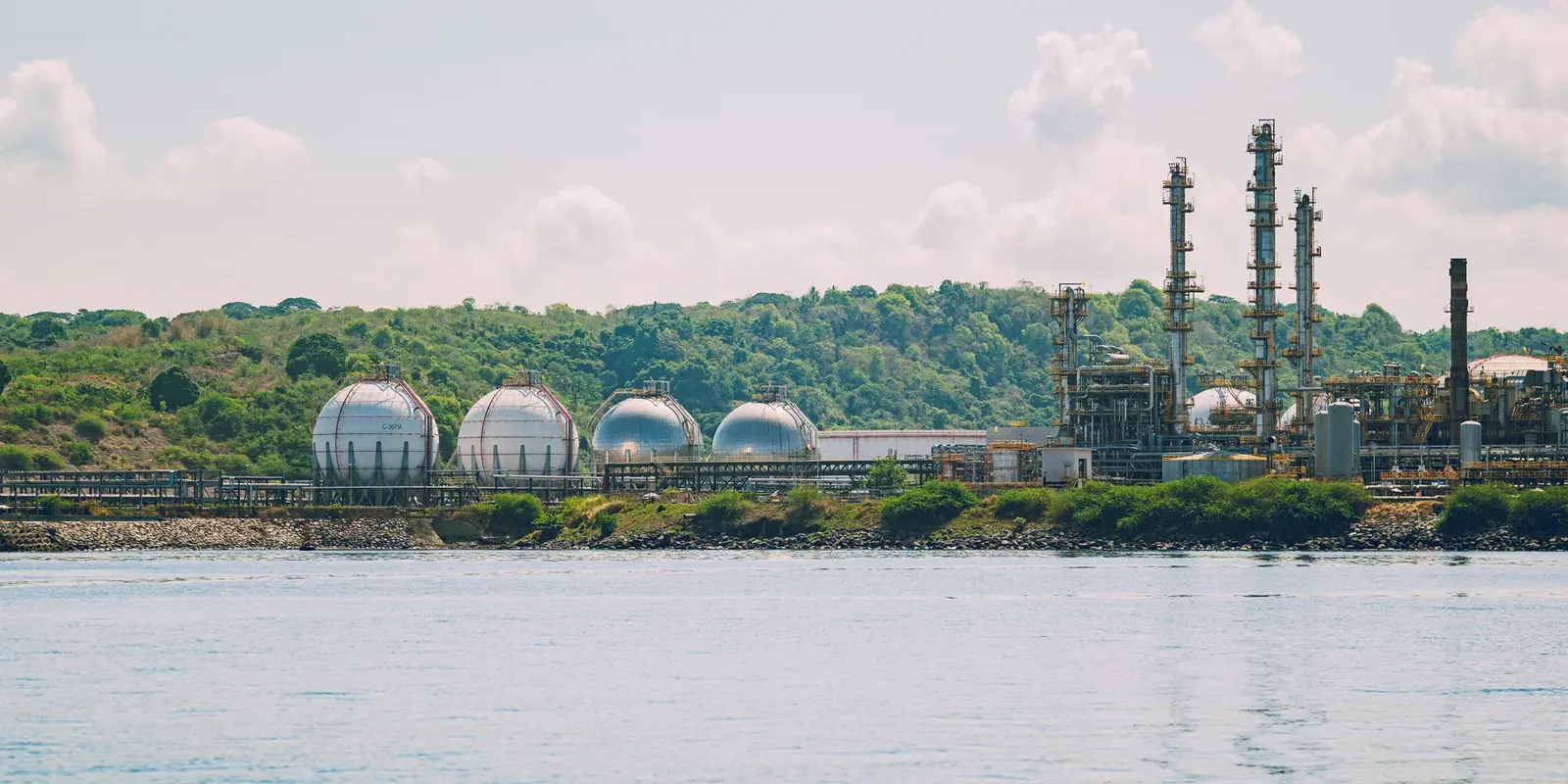
Oil and gas operations carry two pressures that rarely sit together comfortably. Production loss is measured in numbers large enough to justify almost any maintenance spend, and the safety regime demands that the equipment protecting people and the environment can be shown to work on demand.
The sector also has the deepest reliability data practice of any, which is where much of the rest of industry borrowed its taxonomy. The work below is what Enco does for operators and their contractors, organised by the problems it is usually brought in to solve.
What makes oil and gas different
The conditions that decide how the work has to be done.
Process safety sits above everything
Facilities run under a safety case or equivalent regime, with barriers and safety critical equipment that have to be demonstrably working. That turns maintenance records into evidence, and makes overdue assurance tasks a regulatory matter rather than a backlog entry.
Turnarounds are the intervention
Most significant work waits for a turnaround, so scope control and preparation quality decide the outcome years in advance. Between turnarounds, the question becomes what can be done online and what risk is carried until the next one.
The cost of a day is large enough to distort decisions
When deferred production dominates every other number, spending decisions are easy to justify and hard to prioritise. Ranking by consequence matters more, not less, because everything can be argued as critical.
Reliability data practice is mature
ISO 14224 came out of this sector, and comparable failure data exists in a way it does not elsewhere. The gap is usually between the data that is collected for reporting and the data that would actually change a strategy.
Facilities outlive their design assumptions
Plants run well past their original life, so integrity management, corrosion history and life extension analysis carry weight that new facilities do not have to think about.
Logistics constrain the work
Offshore and remote sites limit beds, cranage, weather windows and helicopter movements, so a plan that ignores mobilisation constraints is not a plan.
Common challenges, and why they happen
1. Turnaround scope growth and slip
Scope arrives late from several directions, each item defensible on its own, and the schedule absorbs it until the critical path breaks and the shutdown runs long.
2. Assurance evidence for safety critical equipment
Protective devices fail hidden, so without scheduled testing there is no evidence they work, and the register of what is safety critical often lags plant changes.
3. Ageing facilities and life extension decisions
Original design assumptions expire, corrosion and fatigue accumulate, and the decision to extend or replace needs evidence that the inspection history may not be organised to give.
4. Production data that cannot settle an argument
Historians hold everything and mean little without context, so each group builds its own view and the daily meeting spends its time reconciling numbers.
5. Backlog and deferrals carrying unseen risk
Work is deferred individually and sensibly, but the accumulated risk of many deferrals is rarely visible in one place, especially across safety critical items.
6. Reliability data that will not compare
Facilities record failures differently, so the same pump failing the same way is counted three ways and benchmarking between sites collapses.
What good looks like
For each challenge above, the shape of a solution that holds, and the tests that tell you whether it does.
Challenge 1
Turnaround scope growth and slip
A scope freeze with a challenge process behind it, complete work packs before the gate, and readiness measured rather than asserted.
What makes it good
- A published freeze date, and a defined path for anything after it
- Every job packaged with materials, permits and access before the gate
- Readiness reported as a percentage of packs complete, not as confidence
- Post-event review that feeds the next turnaround's estimates
Challenge 2
Assurance evidence for safety critical equipment
A maintained register with performance standards, failure-finding tasks at justified intervals, and results recorded where an auditor can follow them.
What makes it good
- Every safety critical item has a performance standard and a test task
- Intervals justified by failure rate and accepted risk, not convenience
- Overdue assurance visible to management before it becomes a finding
- Register updated through management of change rather than annually
Challenge 3
Ageing facilities and life extension decisions
Integrity data pulled together by system, with risk based inspection planning and whole of life costing behind the recommendation.
What makes it good
- Condition and corrosion history joined to the right equipment
- Inspection effort ranked by risk rather than spread evenly
- Remaining life estimates state their confidence and their basis
- The do-nothing option costed alongside the others
Challenge 4
Production data that cannot settle an argument
Contextualised data with agreed KPI definitions, validated on load, and lineage from any figure back to the tag it came from.
What makes it good
- One definition per measure, written down and applied everywhere
- Units and tag context normalised once, not per report
- Validation catches bad sensors before the number is published
- The same query reproduces the same answer next quarter
Challenge 5
Backlog and deferrals carrying unseen risk
A deferral process that ranks by consequence, aggregates the risk and surfaces it at the level where it can be accepted or funded.
What makes it good
- Deferral requires a documented risk assessment and an owner
- Aggregate risk reported, not just individual work orders
- Safety critical deferrals separated from the general backlog
- Backlog measured in crew-weeks so it can be planned against
Challenge 6
Reliability data that will not compare
A common taxonomy with defined equipment boundaries and short, class-specific code lists, applied consistently from a chosen date.
What makes it good
- Boundaries agreed per equipment class so failure rates are comparable
- Failure mode lists tied to the class rather than a site-wide dropdown
- Coding quality reviewed where the numbers are discussed
- Comparison against published reliability data where it fits
How this work gets delivered
The delivery models this work usually runs under, and what each one suits.
| Delivery model | When it fits | How it runs |
|---|---|---|
| Defined project or study | A bounded question such as a criticality review, a safety critical register rebuild or a reporting pipeline. | Fixed deliverables and an agreed schedule, with documented reasoning so the result survives the handover. |
| Turnaround preparation support | The window before a shutdown, where scope, work packs and materials decide the outcome. | Scope challenge, work packaging, readiness measurement and the gates that keep unprepared work out of the event. |
| Embedded specialist | Reliability, integrity or maintenance systems capability needed inside the team for a period. | A practitioner works in your systems and your governance, delivering the work and building capability alongside it. |
| Ongoing support under a panel or rates agreement | Improvement programs that run across several facilities or several years. | Drawn down as needed, with continuity of people so the context is not relearned every engagement. |
| Hosted application or platform | Coordination, monitoring or reporting gaps that no existing product covers. | Built and run as a service, or deployed into your environment where security policy requires it. |
How we work inside them
The same sequence whichever model the work runs under.
- Understand the problem with operations, maintenance and the integrity team together, because the answer usually sits across all three.
- Assess the current state against your own standards and management system first, with published practice as a reference point rather than a target.
- Rank by consequence using your risk matrix, so safety, environmental and production consequences stay in the language the site already uses.
- Respect the assurance chain. Anything touching safety critical equipment produces records that stand up to an auditor, not just a tidy spreadsheet.
- Work inside your systems, including the historian, the maintenance system and the documents your management of change process controls.
- Hand over the reasoning, then measure with numbers agreed before the work started, including the ones that did not move.
Tools, methods and systems
Reliability and integrity
- Criticality assessment and consequence ranking
- FMECA and RCM decision logic
- Failure-finding intervals for protective devices
- Risk based inspection concepts and integrity data review
- Whole of life and life extension costing
Maintenance systems and data
- ISO 14224 taxonomy, boundaries and failure coding
- Safety critical equipment registers and performance standards
- Job packs, turnaround work packaging and readiness gates
- SAP PM, Pronto Xi and IBM Maximo
Monitoring and process data
- Condition monitoring program design and review
- Historian integration over OPC UA
- KPI definition, validation and contextualisation
- Exception-based alerting into the work process
Analytics and applications
- Dimensional modelling and incremental ETL
- Power BI operational and compliance reporting with lineage
- Custom applications for coordination and assurance gaps
Common questions
Do you work offshore as well as onshore?
The methods are the same and the constraints differ. Offshore work has to be planned around beds, cranage, weather and helicopter movements, which changes how scope is packaged and how much can be prepared in advance. Much of the analysis and data work happens onshore either way.
How does this fit our safety case obligations?
It works inside them. Enco does not write or certify safety cases. Where work touches safety critical equipment, it is shaped so the strategy, the tasks and the records support the assurance obligations you already carry, and so changes run through your management of change process rather than around it.
Can you support a turnaround?
Yes, usually in the preparation window where the outcome is decided: challenging scope, packaging work, confirming materials and access, and measuring readiness against the gates. Support during the event is possible, but the value is highest before it.
Do you work with ISO 14224 data?
Yes, and often with the gap between the taxonomy on paper and the coding actually applied at the end of a shift. Equipment boundaries and short class-specific code lists usually do more for comparability than a longer standard-conformance exercise.
Can you help with brownfield modifications?
Yes, through the asset information and maintenance side: making sure changes reach the register, the strategies, the spares and the safety critical equipment list, which is where modifications most often leave gaps.
Key terms
Plain-language definitions from our glossary for the concepts this page leans on.
Standards and further reading
Reference points we draw on where they suit the work. We also work to client internal standards and established site practice.
- Safety cases and validation for offshore facilities (NOPSEMA)
- ISO 14224:2016 Collection and exchange of reliability and maintenance data for equipment (ISO)
- IEC 61511-1:2016+AMD1:2017 Functional safety, safety instrumented systems (IEC)
- ISO 15663:2021 Life cycle costing for petroleum and gas industries (ISO)
- ISO 55001:2024 Asset management system requirements (ISO)
- Guide for major hazard facilities, safety management systems (Safe Work Australia)
- Best practices, metrics and guidelines for maintenance and reliability (SMRP)
Related experience
How these initiatives are approached, and the value they create.
Related articles
The methods behind the work, explained in full.
Calculators
Free tools that run in the browser, with the formulas explained.
Working through something like this?
Tell us what you are dealing with, or see how we work through an engagement.