
Agriculture solutions
Seasons set the schedule, assets are spread across paddocks with patchy connectivity, and machine data often belongs to someone else. What that means, and what good answers look like.
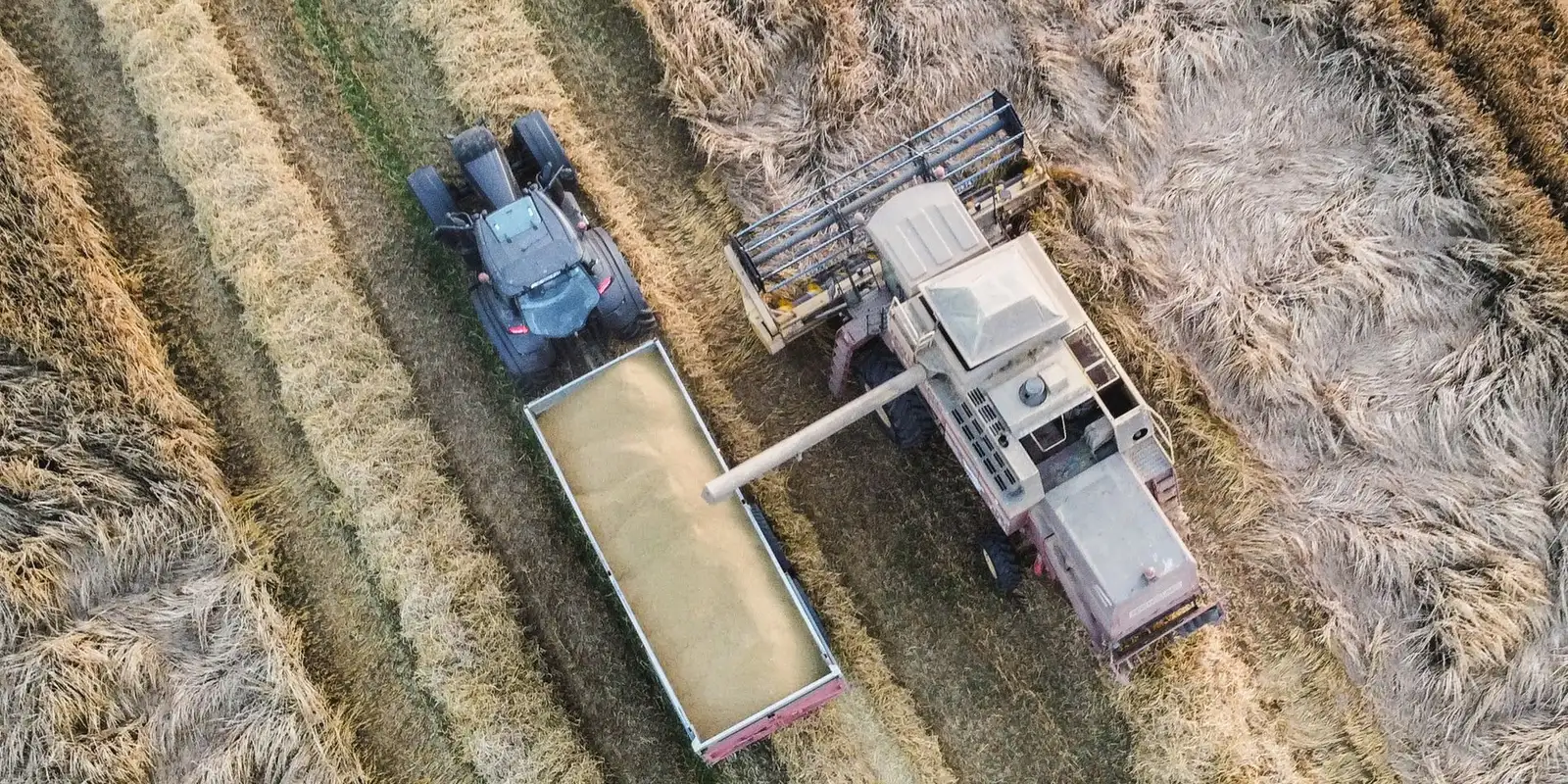
Agriculture runs on windows. Sowing and harvest happen when the crop and the weather say so, not when the workshop is free, and a breakdown inside one of those windows costs part of a season rather than part of a shift.
The assets are spread out, often mobile, increasingly connected and frequently reporting into a platform somebody else controls. The work below is the technology, engineering and consulting Enco does for agricultural operations, organised by the problems it is usually brought in to solve.
What makes agriculture different
The conditions that decide how the work has to be done.
The season is the schedule
Maintenance, upgrades and changes have to happen outside narrow operating windows, which makes pre-season readiness far more valuable than fast response during them.
Assets are dispersed and often moving
Machinery, pumps, silos, tanks and irrigation gear sit across paddocks and properties rather than inside a plant fence, so travel time dominates inspection and repair.
Connectivity cannot be assumed
Coverage is patchy and power is limited, so anything that depends on a live connection has to tolerate losing it and catch up afterwards.
Machine data usually belongs to a platform
Modern equipment reports into the manufacturer's system, and mixed fleets mean several of them. Ownership, export and interoperability terms decide whether that data is an asset or a rental.
Grain handling is bulk materials physics
Silos, augers, elevators and chutes bridge, rathole and block for the same reasons mine site chutes do, and the same flow engineering applies at a smaller scale.
Operations run lean
Teams are small and often seasonal, so systems that need a specialist to run them do not survive. Simplicity and fit are worth more than features.
Common challenges, and why they happen
1. Breakdowns inside the operating window
Machinery sits idle for months and then runs continuously under load, so failures surface at exactly the moment there is no time to plan and every hour counts against the crop.
2. Monitoring dispersed assets without driving to them
Water levels, pumps, gensets, fuel and silo conditions are checked by driving, which burns hours and still misses the event that happens between visits.
3. Data locked inside vendor platforms
Each machine brand and agronomy service holds its own slice, so nothing joins up and moving to a different supplier means losing the history.
4. Grain handling that blocks, bridges or spills
Silos, augers and chutes are often sized by precedent and then asked to handle different products, moistures and rates, so flow problems and spillage follow.
5. Reporting assembled paddock by paddock
Yields, inputs, machine hours and compliance records live in separate systems and notebooks, so any consolidated view takes a week and ages immediately.
6. Irrigation and water assets managed reactively
Pumps, pivots and pipelines are repaired when they stop, and a failure during a watering window costs yield that cannot be recovered later.
What good looks like
For each challenge above, the shape of a solution that holds, and the tests that tell you whether it does.
Challenge 1
Breakdowns inside the operating window
Pre-season readiness that finds the problems before the window, with the few critical spares held locally and service arrangements agreed in advance.
What makes it good
- Pre-season inspection based on the failure modes that actually stop work
- Critical spares identified by consequence and lead time, not by habit
- Service and parts arrangements confirmed before the season, not during
- Findings tracked to closure rather than noted and forgotten
Challenge 2
Monitoring dispersed assets without driving to them
Telemetry that tolerates poor connectivity, sends exceptions rather than streams, and reaches a phone in minutes.
What makes it good
- Store-and-forward so nothing is lost when the link drops
- Battery and solar power budgets that survive the season
- Alerts defined by what needs action, not by what can be measured
- One dashboard rather than one app per vendor
Challenge 3
Data locked inside vendor platforms
Ownership and export terms settled up front, with data pulled into one place you control and standards used where they exist.
What makes it good
- Written data ownership and export terms before purchase
- Data extractable in a usable format without a project each time
- Interoperability standards used across brands where they apply
- One consolidated record that outlives the equipment
Challenge 4
Grain handling that blocks, bridges or spills
Material characterisation first, then flow checked across the real range of products and moistures before anything is built or modified.
What makes it good
- Flow verified across the full product and moisture range
- Geometry that suits the worst case, not the average one
- Wear and access considered so maintenance is possible in season
- Decisions recorded against the material data behind them
Challenge 5
Reporting assembled paddock by paddock
Automated collection into one modelled set of data, with definitions agreed once and reporting that refreshes itself.
What makes it good
- One definition per measure across paddocks, machines and seasons
- Validation that catches missing or impossible records on load
- Reports that refresh without anyone assembling them
- History kept in a form that supports season to season comparison
Challenge 6
Irrigation and water assets managed reactively
Consequence-ranked strategies for the water assets, with simple condition checks and monitoring on the few that matter most.
What makes it good
- Criticality reflecting the crop consequence, not the asset value
- Monitoring only where failure gives warning worth acting on
- Spares and standby arrangements for the assets that stop irrigation
- Checks written so a seasonal worker can carry them out
How this work gets delivered
The delivery models this work usually runs under, and what each one suits.
| Delivery model | When it fits | How it runs |
|---|---|---|
| Defined project or study | A bounded question such as a grain handling flow review, a telemetry design or a reporting build. | Fixed deliverables and a schedule that works around the season, with the reasoning documented for whoever maintains it next. |
| Seasonal readiness support | The window before sowing or harvest, when preparation decides how the season runs. | Inspection planning, critical spares, service arrangements and the checks that confirm equipment is ready before it is needed. |
| Hosted application or platform | Monitoring and consolidation gaps where no product fits the operation. | Built and run as a service, sized for a small team, with your data exportable and yours. |
| Ongoing support under a rates agreement | Improvement that runs across seasons, or support that has to be available when something changes. | Drawn down as needed, with the same people keeping context between seasons. |
How we work inside them
The same sequence whichever model the work runs under.
- Understand the operation through a season, with the people who run the machines and make the calls in the window.
- Assess what exists first, including the equipment platforms already in use, so effort goes into gaps rather than duplicating what is there.
- Rank by consequence to the crop and the window rather than by asset value, because the two rarely agree.
- Design for patchy connectivity and small teams. Anything that needs constant coverage or a specialist to operate will not survive a season.
- Settle data ownership and export terms before technology decisions, so today's convenience does not become tomorrow's lock-in.
- Leave documented decisions and simple procedures behind, then measure the result against numbers agreed before the work started.
Tools, methods and systems
Monitoring and telemetry
- Low-power and cellular telemetry with store-and-forward
- Tank, pump, genset and fuel monitoring
- Exception-based alerting to phones
- Condition checks sized for seasonal crews
Engineering
- DEM modelling of silos, augers, chutes and transfers
- Material characterisation and flow property testing
- Structural analysis and FEA
- Reverse engineering and fabrication drawings
Data and reporting
- Consolidation across machine, agronomy and finance data
- Dimensional modelling and incremental ETL
- Power BI reporting across paddocks, machines and seasons
- Data ownership, export and interoperability review
Maintenance and readiness
- Criticality ranking against the operating window
- Pre-season inspection and readiness planning
- Critical spares by consequence and lead time
- Simple job plans for seasonal crews
Common questions
Do you work with smaller operations, or only corporate farms?
Both. The methods scale down as well as up, and small operations often get more from a short, focused piece of work than from a program. A single telemetry design or a grain handling review is a normal size of engagement.
What happens where there is no reliable connectivity?
The design assumes the link will drop. Devices buffer readings and forward them when coverage returns, alerts are based on exceptions rather than constant streaming, and the dashboard shows when data is stale rather than pretending it is current.
Who owns the data from our machines and sensors?
That depends on the terms you agreed when the equipment or service was bought, which is why it is worth checking before the next purchase rather than after. Where Enco builds a platform, the data is yours and exportable, and we document ownership and access up front.
Can you work with the farm software we already use?
Usually yes, where the platform allows export or has an interface. The aim is one consolidated picture rather than another system, so the work often centres on pulling existing sources together rather than replacing them.
Is grain handling really the same engineering as mining?
The physics is the same. Bridging, ratholing, blockages and spillage come from material properties, geometry and moisture whether the product is iron ore or barley. The tolerances, scale and cost of failure differ, so the answers are sized accordingly.
Key terms
Plain-language definitions from our glossary for the concepts this page leans on.
Standards and further reading
Reference points we draw on where they suit the work. We also work to client internal standards and established site practice.
- Australian Farm Data Code (National Farmers' Federation)
- Grains research and extension (GRDC)
- ISOBUS conformance and interoperability (AEF)
- ISO 11783-1:2017 Tractors and machinery for agriculture and forestry, serial control and communications (ISO)
- Digital agriculture research (CSIRO)
- ISO 17359:2018 Condition monitoring and diagnostics of machines (ISO)
Related experience
How these initiatives are approached, and the value they create.
Related articles
The methods behind the work, explained in full.
Calculators
Free tools that run in the browser, with the formulas explained.
Working through something like this?
Tell us what you are dealing with, or see how we work through an engagement.