
Grain flow paths and chute upgrades guided by DEM
Discrete Element Method modelling of receival and out-loading flow paths guided chute and liner upgrades that kept grain moving through peak harvest.
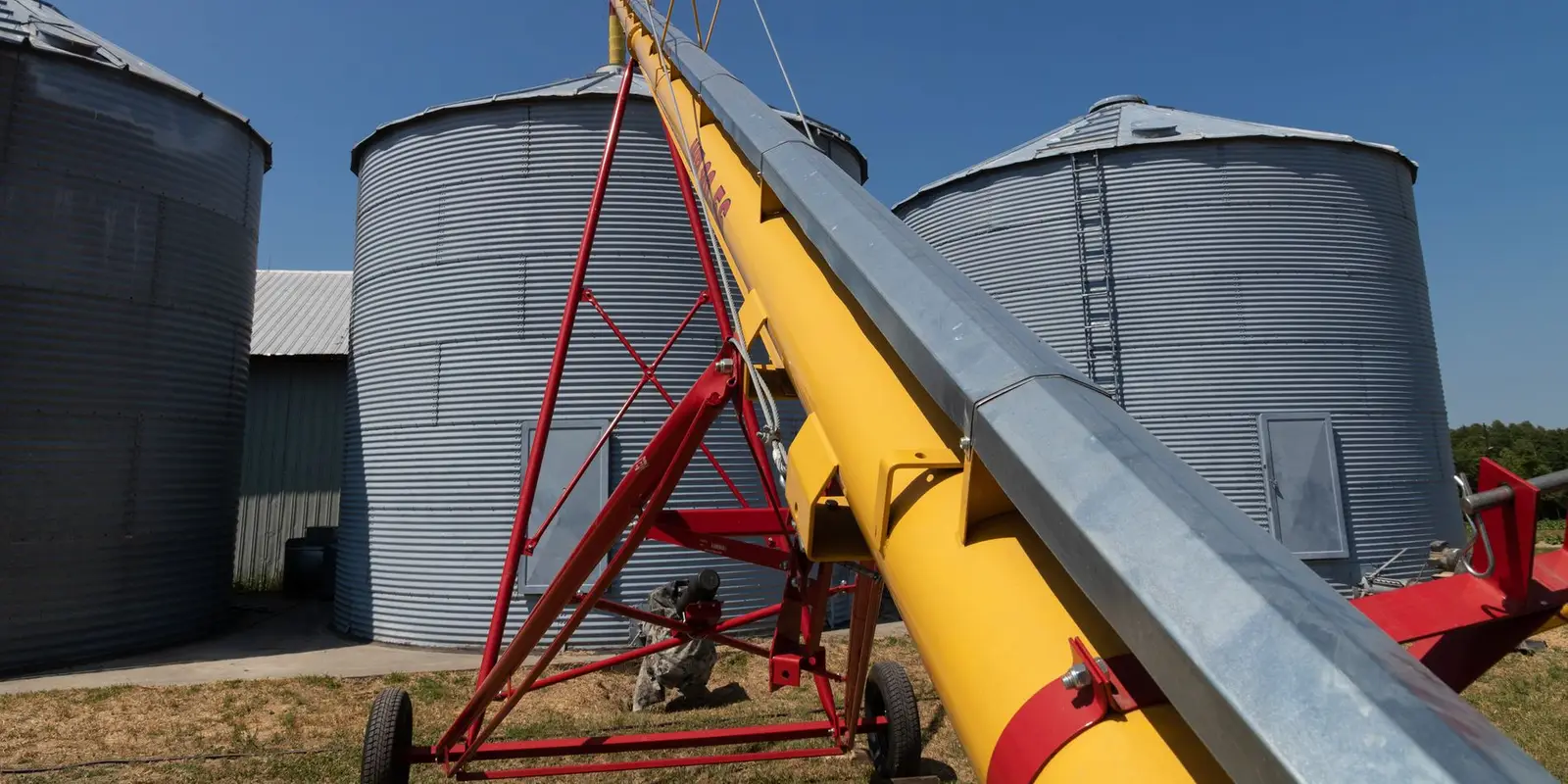
receival and out-loading keep moving
less manual clearing at the worst possible time
checked against future throughput before fabrication
The challenge
Receival and out-loading paths are commonly built up over years of upgrades, with chutes, spouts and liners changed piecemeal as throughput grew and product mixes changed. Flow and blockage problems then surface at the worst possible time, when product is sticky or high in moisture and the receival window is already under pressure.
Clearing blockages by hand is slow, costly and puts people close to equipment they should not need to approach. Site personnel require flow paths that handle the full range of product conditions, and design decisions backed by evidence rather than another field modification.
When it's time to act
The signs we commonly see when this initiative is due.
- Blockages cluster at the worst time: high moisture product in the middle of the receival peak.
- People clearing hang-ups by hand, close to equipment they should not need to approach.
- Chutes, spouts and liners changed piecemeal for years without solving the flow.
- Out-loading rates that fall short whenever the product is sticky.
- Growth plans that quietly assume the existing flow paths will cope.
How we deliver it
Characterise product
Test the product range and moisture conditions that actually pass through the site.
Scan the flow path
3D scan receival and out-loading so the model reflects years of piecemeal upgrades.
Simulate
Model grain flow with DEM across the product and moisture range to find the choke points.
Upgrade design
Redesign chutes, spouts and liners to control the stream and clear build-up points.
Install and verify
Fabrication-ready drawings, installation support, then confirm flow through peak season.
Characterise product
Test the product range and moisture conditions that actually pass through the site.
Scan the flow path
3D scan receival and out-loading so the model reflects years of piecemeal upgrades.
Simulate
Model grain flow with DEM across the product and moisture range to find the choke points.
Upgrade design
Redesign chutes, spouts and liners to control the stream and clear build-up points.
Install and verify
Fabrication-ready drawings, installation support, then confirm flow through peak season.

Our approach
- Understand where flow actually fails, with the operators who work the receival pit: which products, at what moisture, and at which points in the path.
- Capture existing geometry with 3D scanning and build accurate models of the flow paths as they currently stand.
- Assess those flow paths against your engineering standards and current design practice, so years of piecemeal upgrades are measured rather than assumed.
- Characterise the product range by testing, then simulate flow with DEM across that range rather than at a single design point.
- Redesign chutes and liners to control the stream and clear build-up points, verified against your standards and relevant industry design practice.
- Deliver fabrication-ready drawings and support installation.
Tools and methods
The value it creates
- Smoother flow through receival and out-loading at peak throughput.
- Fewer blockages and less manual intervention through harvest.
- Designs checked against future throughput before committing steel.
What changes
Piecemeal field modifications
Upgrades designed from simulated flow behaviour
Blockages cleared by hand at peak
Flow maintained across the product and moisture range
Choke points guessed at
The constraint located and removed
Designs sized for today
Geometry checked against future throughput before fabrication
Where these initiatives fail
The failure modes we design against.
- Testing one product at one moisture, when harvest delivers a range of both.
- Modelling the drawings instead of scanning what years of upgrades actually built.
- Fixing one choke point and moving the blockage one chute downstream.
- Committing steel in the maintenance window without simulating the change first.
Common questions
Does DEM work for grain as well as ore?
Yes. The physics is the same discrete-particle contact mechanics; what changes is the characterisation. Grain properties shift strongly with moisture and variety, so the model is calibrated across the range the site actually receives.
When is this work best done?
Design and simulation can run at any time; installation lands in the quiet season so the upgraded paths are proven before the next peak arrives.
What if the problem is capacity rather than blockage?
The same model answers both. Simulation shows whether the constraint is geometry, liner selection or genuine capacity, which decides whether the fix is a chute upgrade or a bigger change.
Key terms
Plain-language definitions from our glossary for the concepts this page leans on.
Further reading
Articles and calculators on the methods behind this work.
- What DEM modelling actually tells you about a transfer chute (article)
- Conveyor Capacity Calculator (tool)
- Agriculture solutions (solution)
Related projects
Facing a similar challenge?
Tell us what you are working through and we will bring the right mix of engineering, data and hands-on experience.
Contact us